
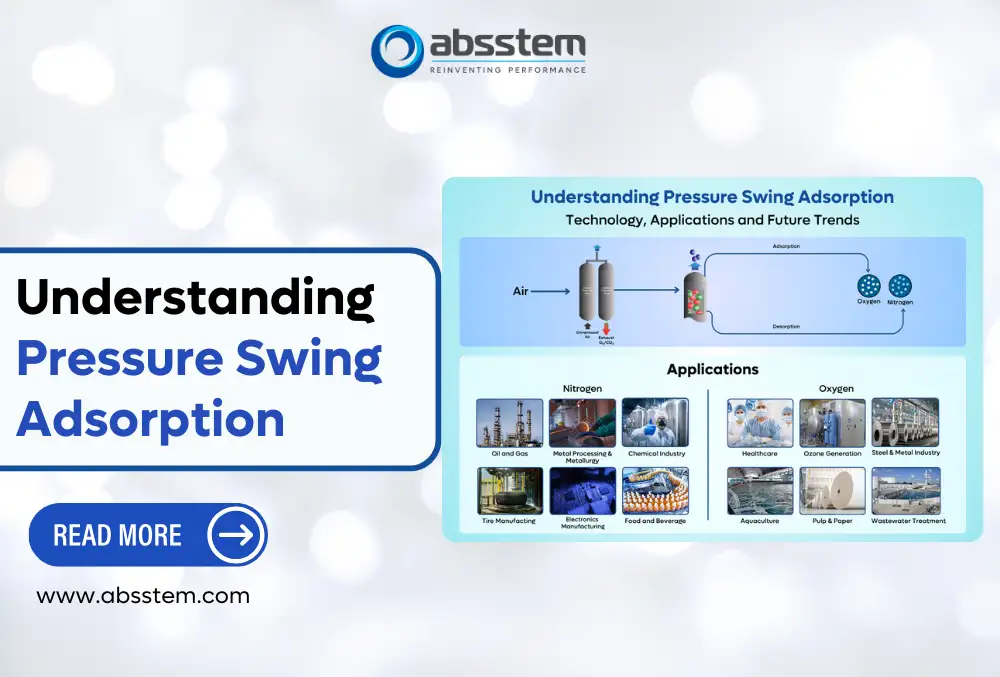
Pressure Swing Adsorption (PSA) is a widely used gas separation technology that plays a vital role in industries and healthcare facilities. It offers an efficient method for producing high-purity gases, such as oxygen, nitrogen, and hydrogen, without relying on chemical processes or bulky storage systems. In this article, we will explain how PSA works, its applications, advantages, challenges, and the innovations shaping its future.
What is Pressure Swing Adsorption (PSA)?
Pressure Swing Adsorption is a process that separates gases based on their molecular properties and affinity toward specific adsorbent materials. By cycling between high- and low-pressure phases, PSA systems trap certain gases on porous materials while allowing others to pass through.
PSA technology involves varying pressure to achieve gas separation. The “pressure swing” component of PSA refers to the alternating high and low pressures applied to enable adsorption and desorption cycles. PSA systems typically include molecular sieves as the medium where gas molecules adhere and detach based on controlled pressure variations.
This method is particularly valuable in producing medical-grade oxygen, purified hydrogen, nitrogen and biogas for industrial use. Its simplicity, cost-effectiveness, and environment-friendly operation make it a preferred choice across sectors.
To read more about PSA, please read our blog titled The Working Principle of Pressure Swing Adsorption (PSA) (1).
How Does PSA Work?
The PSA process involves several steps that continuously alternate to ensure gas separation:
- Adsorption (Generation): In the adsorption stage, dry, oil-free compressed air is introduced into a PSA tower containing molecular sieves (e.g., CMS for nitrogen production). Under high pressure, oxygen molecules, being smaller in size, attach to the surface of the molecular sieve. Larger nitrogen molecules do not adhere to the surface and pass through as the final product. The efficiency of this stage depends on both the pressure and temperature of the incoming air. As pressure increases, the adsorption rate of oxygen molecules also increases, leading to effective separation. Adsorption continues until the molecular sieve becomes saturated, meaning it cannot hold any more oxygen molecules. This saturation point marks the end of the adsorption cycle and triggers the need to transition to the desorption stage.
- Depressurization or Desorption (regeneration): Once the molecular sieve is saturated, the system shifts to the desorption stage. In this phase, the pressure within the PSA tower is released to the atmosphere (depressurization), allowing the oxygen molecules to detach from the surface of the molecular sieve. This pressure reduction effectively “resets” the molecular sieve, making it ready for another adsorption cycle. Desorption is essentially the reverse of adsorption. By lowering the pressure, the bond between the oxygen molecules and the molecular sieve weakens, enabling the release of the adsorbed molecules. The desorbed oxygen is vented out, leaving the molecular sieve clean and prepared for the next cycle. The PSA process operates with two parallel towers to ensure continuous gas production. While one tower undergoes adsorption, the other is in desorption mode, allowing for uninterrupted output.
- Pressure Equalization: To maximize efficiency, PSA systems often include an intermediate step known as pressure equalization. Once the adsorption cycle in one tower is complete, air from the pressurized tower is transferred to the second tower, equalizing the pressure between them. This pressure equalization minimizes the loss of compressed air and enhances the system’s overall efficiency. In advanced PSA setups, a small portion of the product gas may also be transferred to the desorbing tower, called purging. This additional step aids in removing any remaining oxygen molecules, further improving purity and reducing waste.
To summarize, a PSA unit typically operates in two parallel towers packed with adsorbent material. The steps are:
- Adsorption (Gas Generation)
- Compressed, dry air is fed into one tower.
- Oxygen (or CO₂, depending on application) adheres to the adsorbent surface.
- The target gas (e.g., nitrogen) passes through as the product.
- Adsorption continues until the adsorbent is saturated.
- Depressurization / Desorption (Regeneration)
- The tower is depressurized, releasing the adsorbed gases into the atmosphere.
- This regenerates the adsorbent bed for reuse.
- Pressure Equalization & Purging
- Gas from the pressurized tower is transferred to the regenerating tower.
- A small portion of product gas may be used for purging, improving overall purity.
- Adsorption (Gas Generation)
These cycles repeat continuously, ensuring a steady, uninterrupted flow of purified gas.
Common Adsorbents
- Zeolites: Used for oxygen separation from air.
- Activated Carbon: Used for the removal of moisture, hydrocarbons, and other impurities.
- Carbon Molecular Sieves: Used for Nitrogen separation from air.
Applications of PSA Technology
- Medical Use
- Oxygen generators in hospitals and home healthcare systems
- Eliminates dependency on cylinders and liquid oxygen deliveries
- Industrial Use
- Nitrogen Generation: Food packaging, pharma, metallurgy, and electronics.
- Hydrogen Purification: Refining, fuel cells, and clean energy projects.
- Oxygen Generation: Brazing, welding, metal cutting, glass production.
- Biogas Upgrading: Removing CO₂ to improve the calorific value of biogas.
- Medical Use
Advantages of Using Pressure Swing Adsorption (PSA)
- Energy-Efficient: Requires less energy compared to other separation methods.
- Cost-Effective: Reduces dependency on external gas suppliers.
- Customizable Purity: Capable of producing gases with varying purity up to 99.999%.
- Environmentally Friendly: Reduces transport-related carbon emissions.
- Scalable: Suitable for small businesses as well as large-scale industrial setups.
Challenges in PSA and Their Mitigation
While PSA offers many benefits, it also faces certain challenges:
- Maintenance Needs: Regular maintenance is essential to ensure reliability.
- Sensitivity to Moisture: Adsorbents may degrade if moisture control is inadequate.
- Adsorbent Wear and Tear: Over time, the performance of adsorbents may decline if not maintained properly
Process Improvements and Operational Insights
Modern PSA systems are increasingly optimised to run smoothly and efficiently:
- System Monitoring: Regular checks on pressure and flow rates help identify issues early.
- Performance Tracking: Keeping records of operational patterns helps in scheduling maintenance.
- Process Adjustments: Fine-tuning operational parameters like pressure levels and cycle times ensures optimal performance.
These improvements enhance reliability and reduce operational costs without the need for complex interventions.
Future Trends in PSA Technology
The field of gas separation is evolving rapidly. Some of the key trends include:
- Advanced Adsorbent Materials: Research is focused on developing materials that offer higher selectivity and longer lifespan.
- Integration with Sustainable Energy: Combining PSA with renewable energy sources helps reduce carbon footprints.
- Enhanced Process Control: Improved sensors and monitoring systems are making PSA units more reliable and efficient.
- Growing Market Demand: Rising industrial requirements and environmental awareness are contributing to steady market growth.
Conclusion
Pressure Swing Adsorption is a reliable, scalable, and sustainable gas separation solution. With advances in adsorbent materials, smart control systems, and integration with green energy, PSA technology is set to play an even larger role in healthcare, industry, and clean energy in the coming years.
Reference
- Absstem Technologies. (2024). The Working Principle of Pressure Swing Adsorption (PSA).